International Holocaust Remembrance Day: Holocaust Remembrance Day programming for ERGs services for ERGs.
International Holocaust Remembrance Day marks the liberation of Auschwitz. It asks for solemn programming, survivor and historian voices, and a refusal to turn the day into a panel of generalities.
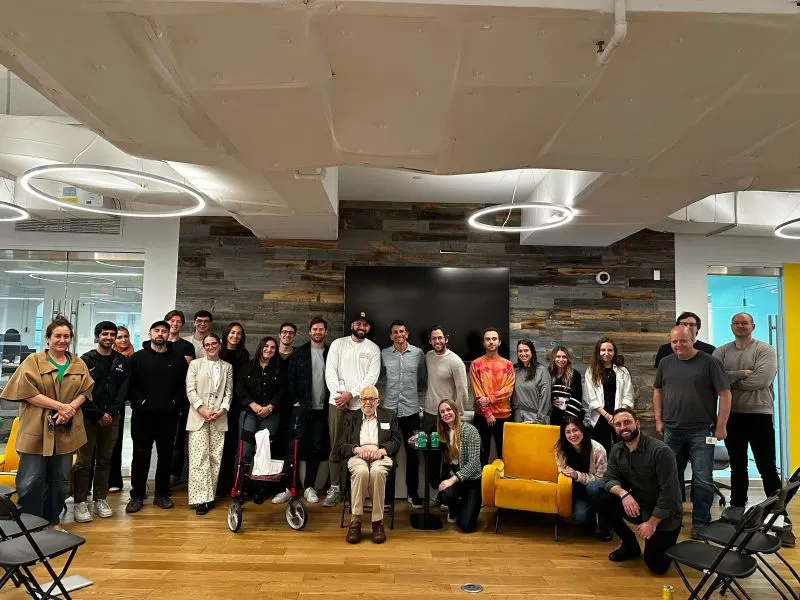
Snap Inc. Jewish ERG Hosts Holocaust Survivor Dr. Michael Katz for Yom HaShoah
More than a calendar moment.
International Holocaust Remembrance Day was established by UN General Assembly Resolution 60/7 in 2005 and marks the 1945 liberation of Auschwitz-Birkenau. For Jewish ERGs, it is one of the most carefully framed days on the calendar: a day for testimony, primary sources, and silence — not a panel on “hate” in general. The framing comes from the survivor community itself, and the USC Shoah Foundation, Yad Vashem, and the US Holocaust Memorial Museum all publish workplace-ready survivor testimony designed for exactly this kind of observance.
The reason this matters more in 2026 than it did a decade ago is the data. The ADL's annual Audit of Antisemitic Incidents has tracked record-breaking numbers in each of the last several years, and AJC's State of Antisemitism in America survey shows Jewish employees increasingly hiding identifiers at work — kippahs, Stars of David, last names on Zoom. The workplace version of Remembrance Day cannot be separated from how the company is responding to that environment the other 364 days.
For ERG leaders, the practical bar is two things: lead with Jewish ERG voices on framing and format, and pair the day with one concrete piece of year-round work — antisemitism in your incident-response policy, education for managers, or a clear escalation path. A statement from leadership without that scaffolding lands as PR; the scaffolding without a statement reads as fear of the topic. Both, together, is what Jewish ERG members are usually asking for.
The Remembrance Day pitfalls.
What sinks Remembrance Day programming isn't usually a missing speaker — it's a misread of the moment. The three misses worth naming out loud.
Flattening into a generic anti-hate day.
Holocaust Remembrance Day is specifically about the Shoah and antisemitism. Folding it into broad “stand against hate” programming erases what it commemorates.
Treating Jan 27 as the whole program.
A single day of testimony with no follow-through reads as a checkbox. Tie the observance to something durable — manager education on antisemitism, a named contact for incidents, or a recurring learning series — so the day points to ongoing work, not a one-off post.
Ignoring how Jewish employees are doing right now.
Don't program this day in a vacuum. Pair it with a real check-in on workplace antisemitism and concrete protections, not just remembrance.
Curated for International Holocaust Remembrance Day.
Concrete services tagged for Remembrance Day — each pulled live from ERGs.io with its own paired imagery. One click to the full details, rate, and inquiry form inside the platform.
Other observances in the calendar.
Every observance gets its own planning page — speakers, vendors, programming ideas, and a timeline.
Stop scrambling. Start planning the month that lands.
ERGs.io pulls every speaker, vendor, and programming format into one workspace — so planning Remembrance Day takes one afternoon, not one month of late nights. Free to start.